Pages

Thursday, June 12, 2014

What Happens to Your Brain When You Eat Junk Food (And Why We Crave It)

Reposted from The Huffington Post 6/12/2014 | Posted: 11/15/2013 8:21 am 
Most of us know that junk food is unhealthy. We know that poor nutrition is related to heart problems, high blood pressure, and a host of other health ailments. You might even know that studies show that eating junk food has been linked to increases in depression

But if it's so bad for us, why do we keep doing it? 
There is an answer. And the science behind it will surprise you. 

Why We Crave Junk Food 
Steven Witherly is a food scientist who has spent the last 20 years studying what makes certain foods more addictive (and tasty) than others. Much of the science that follows is from his excellent report, "Why Humans Like Junk Food." 


According to Witherly, when you eat tasty food, there are two factors that make the experience pleasurable.

First, there is the sensation of eating the food. This includes what it tastes like (salty, sweet, umami, etc.), what it smells like, and how it feels in your mouth. This last quality -- known as "orosensation" -- can be particularly important. Food companies will spend millions of dollars to discover the most satisfying level of crunch in a potato chip. Their scientists will test for the perfect amount of fizzle in a soda. These factors all combine to create the sensation that your brain associates with a particular food or drink.
The second factor is the actual macronutrient makeup of the food -- the blend of proteins, fats, and carbohydrates that it contains. In the case of junk food, food manufacturers are looking for a perfect combination of salt, sugar, and fat that excites your brain and gets you coming back for more.
Here's how they do it...
How Science Creates Cravings
There are a range of factors that scientists and food manufacturers use to make food more addictive.
Dynamic contrast. Dynamic contrast refers to a combination of different sensations in the same food. In the words of Witherly, foods with dynamic contrast have:
... an edible shell that goes crunch followed by something soft or creamy and full of taste-active compounds. This rule applies to a variety of our favorite food structures -- the caramelized top of a creme brulee, a slice of pizza, or an Oreo cookie -- the brain finds crunching through something like this very novel and thrilling.
Salivary response. Salivation is part of the experience of eating food, and the more that a food causes you to salivate, the more it will swim throughout your mouth and cover your taste buds. For example, emulsified foods like butter, chocolate, salad dressing, ice cream, and mayonnaise promote a salivary response that helps to lather your taste buds with goodness. This is one reason why many people enjoy foods that have sauces or glazes on them. The result is that foods that promote salivation do a happy little tap dance on your brain and taste better than ones that don't.
Rapid food meltdown and vanishing caloric density. Foods that rapidly vanish or "melt in your mouth" signal to your brain that you're not eating as much as you actually are. In other words, these foods literally tell your brain that you're not full, even though you're eating a lot of calories.
The result: You tend to overeat.
In his best-selling book Salt Sugar Fat, author Michael Moss describes a conversation with Witherly that explains vanishing caloric density perfectly...
I brought him two shopping bags filled with a variety of chips to taste. He zeroed right in on the Cheetos. "This," Witherly said, "is one of the most marvelously constructed foods on the planet, in terms of pure pleasure." He ticked off a dozen attributes of the Cheetos that make the brain say more. But the one he focused on most was the puff's uncanny ability to melt in the mouth. "It's called vanishing caloric density," Witherly said. "If something melts down quickly, your brain thinks that there's no calories in it ... you can just keep eating it forever."

Sensory specific response. Your brain likes variety. When it comes to food, if you experience the same taste over and over again, then you start to get less pleasure from it. In other words, the sensitivity of that specific sensor will decrease over time. This can happen in just minutes.
Junk foods, however, are designed to avoid this sensory specific response. They provide enough taste to be interesting (your brain doesn't get tired of eating them), but it's not so stimulating that your sensory response is dulled. This is why you can swallow an entire bag of potato chips and still be ready to eat another. To your brain, the crunch and sensation of eating Doritos is novel and interesting every time.
Calorie density. Junk foods are designed to convince your brain that it is getting nutrition, but to not fill you up. Receptors in your mouth and stomach tell your brain about the mixture of proteins, fats, carbohydrates in a particular food, and how filling that food is for your body. Junk food provides just enough calories that your brain says, "Yes, this will give you some energy," but not so many calories that you think, "That's enough, I'm full." The result is that you crave the food to begin with, but it takes quite some time to feel full from it.
Memories of past eating experiences. This is where the psychobiology of junk food really works against you. When you eat something tasty (say, a bag of potato chips), your brain registers that feeling. The next time you see that food, smell that food, or even read about that food, your brain starts to trigger the memories and responses that came when you ate it. These memories can actually cause physical responses like salivation and create the "mouth-watering" craving that you get when thinking about your favorite foods.
All of this brings us to the most important question of all.
Food companies are spending millions of dollars to design foods with addictive sensations. What can you and I do about it? Is there any way to counteract the money, the science, and the advertising behind the junk food industry?
How to Kick the Junk Food Habit and Eat Healthy
The good news is that the research shows that the less junk food you eat, the less you crave it. My own experiences have mirrored this. As I've slowly begun to eat healthier, I've noticed myself wanting pizza and candy and ice cream less and less. Some people refer to this transition period as "gene reprogramming."
Whatever you want to call it, the lesson is the same: If you can find ways to gradually eat healthier, you'll start to experience the cravings of junk food less and less. I've never claimed to have all the answers (or any, really), but here are three strategies that might help.
1. Use the "outer ring" strategy and the "5 ingredient rule" to buy healthier food.
The best course of action is to avoid buying processed and packaged foods. If you don't own it, you can't eat it. Furthermore, if you don't think about it, you can't be lured by it.
We've talked about the power of junk food to pull you in and how memories of tasty food in the past can cause you to crave more of it in the future. Obviously, you can't prevent yourself from ever thinking about junk food, but there are ways to reduce your cravings.
First, you can use my "outer ring" strategy to avoid processed and packaged foods at the grocery store. If you limit yourself to purchasing foods that are on the outer ring of the store, then you will generally buy whole foods (fruits, vegetables, meat, eggs, etc.). Not everything on the outer ring is healthy, but you will avoid a lot of unhealthy foods.
You can also follow the "5 ingredient rule" when buying foods at the store. If something has more than 5 ingredients in it, don't buy it. Odds are, it has been designed to fool you into eating more of it. Avoid those products and stick with the more natural options.
2. Eat a variety of foods.
As we covered earlier, the brain craves novelty.
While you may not be able to replicate the crunchy/creamy contrast of an Oreo, you can vary your diet enough to keep things interesting. For example, you could dip a carrot (crunchy) in some hummus (creamy) and get a novel sensation. Similarly, finding ways to add new spices and flavors to your dishes can make eating healthy foods a more desirable experience.
Moral of the story: Eating healthy doesn't have to be bland. Mix up your foods to get different sensations and you may find it easier than eating the same foods over and over again. (At some point, however, you may have to fall in love with boredom.)
3. Find a better way to deal with your stress.
There's a reason why many people eat as a way to cope with stress. Stress causes certain regions of the brain to release chemicals (specifically, opiates and neuropeptide Y). These chemicals can trigger mechanisms that are similar to the cravings you get from fat and sugar. In other words, when you get stressed, your brain feels the addictive call of fat and sugar and you're pulled back to junk food.
We all have stressful situations that arise in our lives. Learning to deal with stress in a different way can help you overcome the addictive pull of junk food. This could include simple breathing techniques or a short guided meditation. Or something more physical like exercise or making art.
With that said, if you're looking for a better written and more detailed analysis of the science of junk food, I recommend reading the #1 New York Times best-seller Salt Sugar Fat.

James Clear


Books mentioned in this article:


In Heatlth,
The Naturally Botanicals Team
www.naturallybotanicals.com

Monday, June 9, 2014

GMO Labeling Legislation Blossoming this Spring

Repost from Natural Products Insider | June 2 2014 | by Lindsay Carlson, Drew Paris and Sheila Shah

Legislation that would require food manufacturers and retailers to label products made with genetically modified organisms (GMOs) is gaining traction throughout the country. Polls have shown widespread public support for GMO labeling laws. As of the date of this article, Vermont, Connecticut and Maine have already enacted GMO labeling laws, and bills have been introduced in at least 22 other state legislatures. Meanwhile, Congress is considering the Safe and Accurate Food Labeling Act (HR 4432), which would mandate that FDA set standards for labeling food products as it pertains to the presence or absence of GMO ingredients, and take a voluntary approach whereby industry players are allowed to choose whether to label their products as containing GMOs.

Impact on Food Litigation
The increase in proposed GMO labeling laws dovetails with an uptick in food labeling litigation. In recent years, food labeling litigation has primarily consisted of class actions involving food products that claim to be “natural." Generally, these cases are brought under state consumer protection laws, and allege that consumers are being misled by food products that are labeled as “natural," but actually contain synthetic ingredients or GMOs. Since a 2009 appellate ruling that a natural foods claim involving high-fructose corn syrup was not pre-empted by FDA, plaintiffs’ attorneys have targeted food manufacturers and retailers in similar litigation, including Kraft, ConAgra Foods, Dole, General Mills, Frito Lay, Snapple and Whole Foods Market.

The proliferation of state GMO labeling laws will likely intensify the litigation risk for food companies. Some 80 percent of foods found in grocery stores contain ingredients made from genetically modified crops. Under proposed GMO labeling laws, food manufacturers, retailers and suppliers may be subjected to new “omission" actions for failure to strictly comply with labeling requirements. GMO laws may provide an additional hook for the “natural" food litigation described above. Finally, GMO laws may be interpreted as endorsing a state policy position that a GMO ingredient is materially different from a non-GMO ingredient, and that GMO ingredients are unnatural and potentially unsafe.

Food labeling litigation has been further complicated by FDA’s silence on the issue. FDA has declined to provide guidance on these issues beyond a 1992 policy stating that GMOs do not “present any different or greater safety concern than foods developed by traditional plant breeding." Although FDA has jurisdiction, it has declined to provide a rule regarding the use of the term “natural." This regulatory ambiguity has let food companies with no choice but to make their own determinations as to whether their products may be called “natural." The proliferation of GMO labeling laws may finally force FDA’s hand.

Lessons from California
One out of every eight Americans is a Californian. Due to the size and reach of California’s economy, many companies adopt California’s standards for nationwide application. Industry insiders should therefore pay special attention to efforts to pass GMO labelling legislation in California. Though the bill was narrowly defeated on May 29, 2014, proponents have vowed to continue their fight.

Much of the proposed GMO labeling legislation is similar to California’s Proposition 65, a 1986 law designed to protect Californians from chemicals known to cause cancer, birth defects or reproductive harm. Prop 65 requires businesses and landlords to warn consumers if products or environments may result in exposure to certain chemicals above designated thresholds. With 800 chemicals within its purview, Prop 65 has touched a staggering number of products and environments in the California economy. It seems every building is equipped with a Prop 65 warning sign, and they are so ubiquitous that consumers generally ignore them.

GMO labeling laws would reach an enormous number of products. Farms are expanding the use of genetically engineered crops that are used in processed foods. The Grocery Manufacturers Association estimated 80 percent of conventional processed foods contain GMOs. Under the proposed laws, all such foods would likely be subject to labeling requirements. Prop 65 led to financial incentives for litigation, burdening businesses with cumbersome cases and extensive costs of defense. One would expect similar from GMO labelling laws becomes law.

Despite the complexity of these issues, one thing is clear: laws on this issue are rapidly evolving, and the food industry should take care to monitor these developments and prepare for potential changes in their labeling practices.

Lindsay Carlson and Drew Paris are partners, and Sheila Shahis an associate in the Los Angeles office of Alston & Bird, a national law firm of more than 800 attorneys.


This month's featured product, Metal Detox 


In Health, 
The Naturally Botanicals Team


Friday, June 6, 2014

How Sugar Went From a Condiment to a Diet Staple

Reposted | Time | Opinion Health | Robert Lustig June 3, 2014
More and more Americans' meals resemble dessert, and Congress is to blame for our collective national stomachache.

Jessica Key—Getty Images
School cafeterias have been under siege for three decades, ever since Ronald Reagan declared ketchup to be a vegetable. The Healthy, Hunger-Free Kids Act passed by Congress in 2010 raised the national per-pupil lunch expenditure from $2.80 to $2.86. But this increase wasn’t enough to allow school cafeterias to subsist on their own—much less cover the cost of a carrot. Instead of upping the amount, last week Rep. Robert Aderholt (R-AL) and the U.S. House Committee on Appropriations decided to gut their own the ridiculously low bar by allowing schools to “opt-out” of the federal nutrition standards. This will no doubt start to roll back the nutrition standards for all schools, which Congress expects will culminate in the No Hungry Kids Act, currently winding its way through the House. We might as well call this the “Dessert for Lunch Act.”

Why did Congress engage in this schizophrenic exercise? Because the American Legislative and Exchange Council, a lobbying group for the food and drug industries, makes campaign contributions to 338 of 535 members of Congress. The documentary movie Fed Up (full disclosure: I’m in it) is an exposé of how the food industry has undermined the American diet to foment a pandemic of obesity and diabetes, all in the name of profit—and how the U.S. Congress has aided and abetted the industry at every turn. As an example, Congress one-upped Reagan by declaring that pizza is now a vegetable.

But dessert for lunch (and breakfast) has ramifications. We’ve already witnessed the medical devastation driven by our current sugar glut. In 1977, the Senate Select Committee on Nutrition and Human Needs, led by Senator George McGovern, issued the first dietary recommendations for Americans, which espoused the low-fat hypothesis. But the food tasted like cardboard; so the low-fat diet inadvertently begat a high-sugar diet. Since then, childhood obesity rates have increased from 5% to 30%, children developed type 2 diabetes (never seen before) and doctors discovered a new entity, non-alcoholic fatty liver disease, now prevalent in one-seventh of all American children. At the same time, academic test scores fell, behavior problems and the need for medication increased, and spending on health care rose from 9.0% of our GDP in 1980 to 17.2% today. More people are shuttled through the medical system every day, and 75% percent of healthcare dollars are spent on preventable diseases that are either caused by or related to sugar consumption. If we don’t acknowledge and aggressively address the inherent connection between “all dessert, all the time” and the medical, social and economic devolution we currently face, America will find itself fat, stupid, and broke.

Don’t get me wrong. We all love dessert. How could you not? Dessert is the reward we look forward to for finishing our lima beans. Liking sweet on our tongue is programmed into our DNA. Sweet was the signal to our ancestors that a foodstuff was safe to eat, because there are no foods that are both sweet and acutely poisonous.

Sugar used to be a condiment, but now it’s a diet staple. Soda, juice, sweetened coconut water, sweetened teas, Frappuccinos—these are all desserts. Foods with added sugar are dessert if any form of sugar is one of the first three ingredients. Granola is dessert. Fruit-flavored yogurt is dessert. Chinese chicken salad is dessert. The American Heart Association limits kids to 4 teaspoons, and adults to 6-9 teaspoons, of added sugar per day. Yet a typical school breakfast consists of a bowl of Froot Loops and a glass of orange juice. That’s 11 teaspoons of added sugar! The program also serves 1% chocolate milk, which has 4 teaspoons of added sugar, a child’s entire limit for the day. Thirty-nine percent of our children eat school lunch every day, and 25% eat school breakfast, as part of the National School Lunch Program. Should kids really be eating dessert for breakfast?

While dessert captivates our brain’s reward center, our taste for it is leading to a tidal wave of chronic diseases – diseases so nefarious and insidious that our healthcare system isn’t prepared for the flood of children with type 2 diabetes and liver disease who will be sick for decades and are already clogging up our healthcare system. And we know that sugar stimulates the reward center of the brain, similar to drugs, which of course is why the food industry puts it in virtually all processed foods—to get you to buy more.
I like dessert—for dessert. Dessert should be safe, and rare. But just like on Halloween, overdoing it has predictable consequences: a huge tummy ache. The same goes for the food industry overdoing it with lobbying money in Congress: that’s why we’ve got one hell of a national tummy ache.

Robert H. Lustig, M.D., M.S.L. is Professor of Pediatrics at the University of California, San Francisco, and the President of the Institute for Responsible Nutrition, a nonprofit dedicated to improving the global food supply, and eradicating type 2 diabetes in children. He is the author of Fat Chance: Beating the Odds Against Sugar, Processed Food, Obesity, and Disease, Sugar Has 56 Names: A Shoppers Guide, and The Fat Chance Cookbook.


In Heath,
The Naturally Botanicals Team
www.naturallybotanicals.com


Friday, May 30, 2014

Why You Should Never Eat High Fructose Corn Syrup

Is high fructose corn syrup really bad for you?

Reposted from Huff Post Food for Thought | Posted: 11/12/2013 12:30 pm


Renaissance physician Paracelsus famously said, "The dose makes the poison," meaning that even harmless substances can become toxic if you eat enough of them. Many people ask me, "Is high fructose syrup really that bad for you?" And my answer to this question is "Yes," mainly for this very reason.
In America today, we are eating huge doses of sugar, especially high fructose corn syrup. It is sweeter and cheaper than regular sugar and is in every processed food and sugar-sweetened drink. Purging it from your diet is the single best thing you can do for your health!
In recent history, we've gone from 20 teaspoons of sugar per person per year to about 150 pounds of sugar per person per year. That's a half pound a day for every man, woman, and child in America. The average 20-ounce soda contains 15 teaspoons of sugar, all of it high fructose corn syrup. And when you eat sugar in those doses, it becomes a toxin.
As part of the chemical process used to make high fructose corn syrup, the glucose and fructose -- which are naturally bound together -- become separated. This allows the fructose to mainline directly into your liver, which turns on a factory of fat production in your liver called lipogenesis.
This leads to fatty liver, the most common disease in America today, affecting 90 million Americans. This, in turn, leads to diabesity -- pre-diabetes and Type 2 diabetes. So, high fructose corn syrup is the real driver of the current epidemic of heart attacks, strokes, cancer, dementia, and of course, Type 2 diabetes.
HFCS contains dangerous chemicals and contaminants
Beside the ginormous load of pure fructose and sugar found in HCFS, as an added bonus, it contains other chemical toxins.  Chemical contaminants used during manufacturing end up in the HFCS and in our food.  What we know, for example, is that chloralkali is used in making high fructose corn syrup. Chloralkai contains mercury. And there are trace amounts of mercury found in high fructose corn syrup-containing beverages. Now, it may not be a problem if we eat this occasionally, but the average person in the country consumes more than 20 teaspoons a day of high fructose corn syrup and the average teenager has 34 teaspoons a day. Over time, these heavy metals can accumulate in the body, causing health problems.
Additionally, when we look at the chemical components of high fructose corn syrup on a spectrograph, we can see that it contains many weird chemicals that we know nothing about. That's why I say better safe than sorry.
Look out for the red flag
The main reason you should give up high fructose corn syrup is that it's a big red flag for very poor quality food. If you see this ingredient on a label, I guarantee you the food is processed junk. So, if high fructose corn syrup is anywhere on the label, put it back on the shelf. You should never eat this food.
If you want to stay healthy, lose weight easily, get rid of chronic disease, and help reduce the obesity epidemic, the single most important thing you can do is eliminate high fructose corn syrup from your diet and from your children's diet. Just banish it from your house.
Purge your kitchen
I challenge you to go into your kitchen right now, go in the cupboard and refrigerator, and look at every single label. And I want you to count how many products you have right now in your house that contain high fructose corn syrup. Then, I want you to get a big garbage bag and throw them out and find replacements that are free of it.
If you want to have some sugar, that's fine. Have a little sugar, but add it to your food yourself. Don't eat food made with added sugar. Cut the high fructose corn syrup from your life forever. You'll be healthier. Our planet will be healthier. And we'll have a healthier generation of children.
Wishing you health and happiness,
Mark Hyman, M.D.
Mark Hyman, MD


Practicing physician

Mark Hyman, MD is a practicing physician, founder of The UltraWellness Center, a six-time New York Times bestselling author, and an international leader in the field of Functional Medicine. You can follow him on Twitter, connect with him on LinkedIn, watch his videos on YouTube, become a fan on Facebook, and subscribe to his newsletter


This month's featured product, Metal Detox 


In Health, 
The Naturally Botanicals Team


Wednesday, May 28, 2014

Five best foods for fighting depression

Reposted from NaturalNews | Wednesday, May 21, 2014 by: Aurora Geib

(NaturalNews) Depression is a cruel disease. It starts out as an unobtrusive emotion and, when left unattended, eventually becomes a life altering and sometimes even a life threatening condition. Judging from the many stories shared on the internet describing actual cases of depression, one thing seems to stand out - a certain lack of hope. This hopelessness is further compounded by the fact that it is accompanied by a helpless feeling and manifested through antisocial behavior that characterizes depressed people. depression

Aside form omega 3 fatty acid rich foods, below are some more examples of foods that can also have a beneficial effect on mood:

Turkey - This food contains tryptophan, an amino acid needed to produce serotonin, a brain chemical. It is a deficiency in serotonin production that is thought to cause depression, so increasing its production could possibly address symptoms. A study published in the online journal Pharmacology, Biochemistry and Behavior shared that tryptophan can be used as an anti-depressant in mild to moderate cases of depression and there is evidence to support its ability to decrease aggression. Tryptophan is also found in meat, beans and eggs.

Vegetables, nuts and whole grains - This food group contains B vitamins: folic acid, B2, B6 and B12. In a study published in the Journal of Psychopharmacology, it was suggested that low levels of the B vitamin, folic acid and high levels of homocysteine, a high level protein, can likely produce depression. It was further suggested that increased doses of folic and vitamin B12 could potentially improve treatment outcome in depression.

Organic Potatoes, corn and rice grain - This food group is an example of complex carbohydrates which, when broken down, become glucose. Glucose fuels the brain, boosting cognitive performance and improving adeptness at tasks involving memory and attention. Avoid eating too much sugar, however, as it causes spikes in the blood sugar and aggravates symptoms of depression.

St. John's Wort - Although there is evidence to the effect that the effectiveness of St. John's Wort in treating serious cases of depression is more akin to placebo, there is also scientific evidence suggesting the herb's efficacy in dealing with milder forms of depression. This herb is widely prescribed in Europe for depression.

Despite the evidence suggesting that depression may be treated by diet, it is still not enough to build a tight case. For now, most doctors agree that proper medical care cannot be substituted by a depression diet or from food or dietary supplements. From the current medical viewpoint, psychotherapy and medication is still the most effective means of dealing with depression.

Sources for this article:

http://www.everydayhealth.com
http://www.nypost.com
http://www.nimh.nih.gov
http://www.emedicinehealth.com/depression/page3_em.htm
http://health.yahoo.net/rodale/PV/the-happiness-diet
http://www.sciencedirect.com/science/article/pii/S0091305701006700
http://www.wisegeek.com
http://nccam.nih.gov/health/stjohnswort/sjw-and-depression.htm

Coppen A. and Bolander-Gouaille, C., (2005) Treatment of depression: time to consider folic acid and vitamin B12. Journal of Psychopharmacology. 19(1):59-65. Retrieved May 7, 2012 from: http://www.ncbi.nlm.nih.gov/pubmed/15671130

Murray, B., (2000). Food for thought: Glucose is good for learning and memory. American Psychological Association. Vol. 31(3) retrieved May 7, 2012 from http://www.apa.org/monitor/mar00/brainbox3.aspxReposted from NaturalNews | Wednesday, May 21, 2014 by: Aurora Geib


This month's featured product, Metal Detox 


In Health, 
The Naturally Botanicals Team


Tuesday, May 27, 2014

7 Most Common Genetically Modified Foods

Reposted May 2014 | Originally Posted: 12/03/2013 8:38 am By Caroline Young
Genetically modified material sounds a little bit like science fiction territory, but in reality, much of what we eat on a daily basis is a genetically modified organism (GMO). Whether or not these modified foods are actually healthy is still up for debate -- and many times, you don't even know that you are buying something genetically modified.
It is not required to label GMOs in the U.S. and Canada, but there are substantial restrictions, and even outright bans, on GMOs in many other countries.
However, by 2018, Whole Foods Market will start labeling GMOs in the U.S. This grocery chains' locations in Britain already provide GMO labeled products, as required by the European Union. According to the EU, GMO refers to plants and animals"in which the genetic material has been altered in a way that does not occur naturally by mating and/or natural recombination."
1) Corn
Almost 85 perecent of corn grown in the U.S. is genetically modified. Even Whole Foods's brand of corn flakes was found to contain genetically modified corn. Many producers modify corn and soy so they are resistant to the herbicide glyphosate, which is used to kill weeds.
2) Soy
Soy is the most heavily genetically modified food in the country. The largest U.S. producer of hybrid seeds for agriculture, Pioneer Hi-Bred International, created a genetically engineered soybean, which was approved in 2010. It is modified to have a high level of oleic acid, which is naturally found in olive oil. Oleic acid is a monounsaturated omega-9 fatty acid that may lower LDL cholesterol (traditionally thought of as "bad" cholesterol) when used to replace other fats.
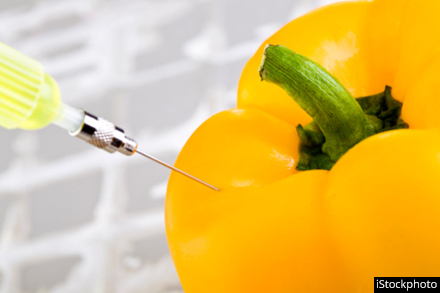
Genetically Modified Foods
3) Yellow Crookneck Squash and Zucchini
Numbers of this GMO veggie are relatively small, but genetically modified yellow squash and zucchini can be found in two different species in the U.S. The species contain protein genes that protect against viruses. Just like their other GMO counterparts, you won't be able to tell the difference between non-GMO and GMO zucchini or squash.
4) Alfalfa
Cultivation of genetically engineered alfalfa was approved in 2011, and consists of a gene that makes it resistant to the herbicide Roundup, allowing farmers to spray the chemical without damaging the alfalfa.
5) Canola
Canola is genetically engineered form was approved in 1996, and as of 2006, around 90 percent of U.S. canola crops are genetically modified.
Genetically Modified Foods
6) Sugar Beets
A very controversial vegetable, sugar beets were approved in 2005, banned in 2010, then officially deregulated in 2012. Genetically modified sugar beets make up half of the U.S. sugar production, and 95 percent of the country's sugar beet market.
7) Milk
To increase the quantity of milk produced, cows are often given rBGH (recombinant bovine growth hormone), which is also banned in the European Union, as well as in Japan, Canada, New Zealand and Australia.
Looking Forward: Do GMO Apples Give Us A Glimpse Of The Future?
GMO apples are currently under review by the USDA, and have been since 2010, when the company Okanagan Specialty Fruits, Inc., developed apple varieties that don't turn brownfor an entire two weeks after slicing.
Polyphenol oxidase (PPO) is an enzyme that causes the browning of Golden Delicious and Granny Smith apples, and scientists are now able to deactivate the gene. Some studies do show stripping fruits of PPO can impact a plant's susceptibility to diseases. The creators say they simply want people to eat more apples and while activating this gene slows the process of browning, it's still a natural process.
It's clear that other parts of the world view GMOs as health threats, but it's still an ongoing debate here in America. For now, many GMOs have been deemed safe by organizations like the Food and Drug Administration and the U.S. Department of Agriculture.


This month's featured product, Metal Detox 


In Health, 
The Naturally Botanicals Team


Thursday, May 22, 2014

5 foods that can treat insomnia and improve sleep

Reposted from Natural News | Monday, May 19, 2014 by: Michael Ravensthorpe

According to the Stanford Center for Sleep Sciences and Medicine, nearly 1 in 10 adults in the United States suffers from insomnia. Although most of these people suffer from short-term insomnia, many of them also suffer from chronic insomnia (i.e., difficulty falling or staying asleep for more than six months). Such sleep deprivation can significantly decrease the quality of one’s life. While stress related to work and family remains the number one cause of insomnia, eating the wrong foods — such as those rich in sugar, caffeine, gluten or polyunsaturated fat — can also contribute to insomnia. Therefore, improving one’s diet is an important first step toward ending insomnia, especially if one favors foods that are known to improve sleep.

insomnia 

Five foods that aid sleep 

1.) Almonds – Almonds are one of the best foods for treating insomnia since they’re excellent sources of magnesium, which is a natural muscle relaxant and contains anti-stress properties. A study published in the Journal of Research in Medical Sciences in December 2012 found that magnesium supplementation could “improve subjective measures of insomnia, such as ISI score, sleep efficiency, sleep time and sleep onset latency, early morning awakening, and likewise, insomnia objective measures, such as concentration of serum renin, melatonin and serum cortisol, in elderly people.” 

2.) Cherries – Cherries and cherry products have often been linked to improved sleep. For example, a study published in the European Journal of Nutrition in December 2012 found that volunteers who consumed a tart cherry juice concentrate for seven days demonstrated “significantly elevated” total melatonin content in their urine compared to the control group. Consequently, the study group experienced improved sleep quality and efficiency. 

3.) Bananas – Many people are often surprised to find that bananas can aid sleep, since they’re well-known for boosting energy. Nonetheless, bananas are also rich in magnesium, potassium and tryptophan, which are the “magic trio” of sleep boosters. Tryptophan is especially effective in this regard since it is the precursor to the two neurotransmitters, serotonin and melatonin, which modulate sleep.

4.) Valerian – The root of the valerian plant, which is usually consumed in tea or tincture form, has been used as a sleeping aid since Ancient Greece and Rome. Moreover, its sedative and anxiolytic properties have been proven by numerous studies. For example, a 2011 study published in Menopause found that valerian extracts provided a “statistically significant” improvement in sleep quality among postmenopausal women suffering from insomnia. The study authors concluded that the “findings from this study add support to the reported effectiveness of valerian in the clinical management of insomnia.”

5.) Oatmeal — Although oatmeal is usually associated with breakfast, its nutritional composition — high in magnesium and potassium — also makes it a suitable evening food. Even the very nature of oatmeal (warm, soothing and soft) is indicative of sleep and calm. Moreover, oatmeal tends to be mixed with milk, which is one of the best-known relaxation drinks.

Sources for this article include:
http://stanfordhospital.org
http://www.ncbi.nlm.nih.gov/pubmed/23853635
http://www.ncbi.nlm.nih.gov/pubmed/22038497
http://www.ncbi.nlm.nih.gov/pubmed/21775910

About the author:
Michael Ravensthorpe is an independent writer whose research interests include nutrition, alternative medicine, and bushcraft. He is the creator of the website, Spiritfoods, through which he promotes the world's healthiest foods.


This month's featured product, Metal Detox 


In Health, 
The Naturally Botanicals Team